The global race to decarbonise is reshaping not only how the world produces energy, but also which natural resources will define the future global economy. As governments accelerate investments in renewable energy technologies, electric vehicles, and battery storage systems, demand for critical minerals is rising at an unprecedented pace, creating new opportunities—and new strategic challenges—for mineral-rich economies around the world.
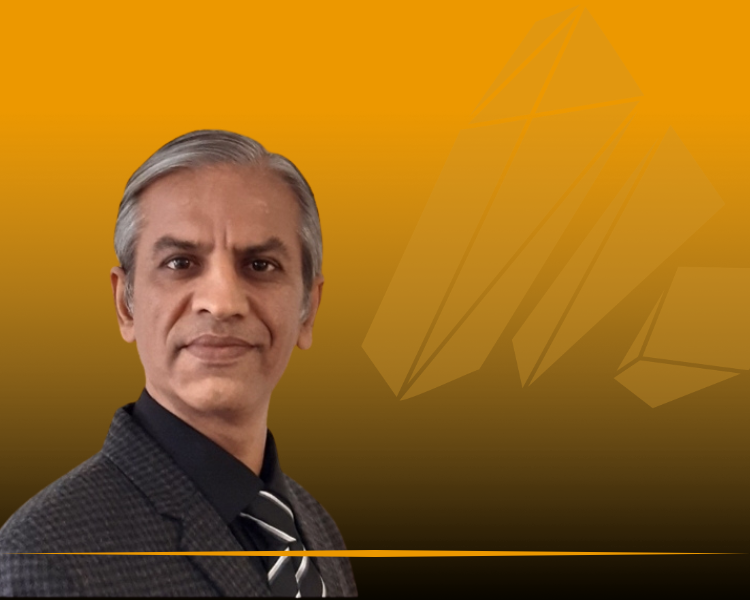
It was against this backdrop that Dr. Kapil Narula, Senior Researcher at the University of Geneva and a member of the International Advisory Board of the Africa Centre for Critical Minerals & Energy Transition (ACCET), delivered the second keynote address at the Africa Critical Minerals & Energy Transition Dialogue 2026. His presentation explored how the global energy transition is transforming demand for critical minerals and why Africa must reposition itself to capture greater value from this historic shift.
According to Dr. Narula, the world is confronting two interconnected realities. On one hand, global energy demand continues to rise as populations grow and developing economies expand. On the other, countries must rapidly decarbonise their energy systems if they are to meet the objectives of the Paris Agreement and limit global warming.
While the transition to clean energy is widely viewed as an environmental imperative, Dr. Narula argued that it is equally a minerals challenge.
“A clean energy system is significantly more mineral-intensive than a fossil fuel-based system.”
Unlike conventional energy technologies, renewable energy systems depend heavily on minerals such as lithium, cobalt, nickel, copper, graphite, and rare earth elements. Electric vehicles require substantially more mineral inputs than traditional combustion-engine vehicles, while wind turbines and battery storage systems similarly depend on a reliable supply of critical minerals.
Drawing on projections from the International Energy Agency (IEA), Dr. Narula noted that global demand for minerals used in clean energy technologies is expected to increase dramatically over the coming decades. This surge, he explained, is redefining the geopolitical and economic significance of countries that possess abundant mineral resources.
For Africa, the implications are profound.
Home to significant reserves of many of the world’s most sought-after critical minerals, the continent has emerged as an indispensable player in the global energy transition. Yet despite its resource endowment, much of Africa continues to occupy the lowest rung of global value chains by exporting raw materials while higher-value refining, processing, and manufacturing take place elsewhere.
Dr. Narula cautioned that this imbalance is occurring at a time when mineral processing capacity has become increasingly concentrated in a small number of countries. Such concentration, he argued, creates vulnerabilities for global supply chains while simultaneously limiting the economic benefits available to mineral-producing nations.
“Africa should not just be a source of raw materials; it must become a hub for value-added processing and manufacturing.”
Rather than viewing mineral extraction as the final objective, Dr. Narula encouraged African governments to pursue policies that expand domestic processing industries, strengthen manufacturing capabilities, and promote regional industrial integration. By moving further up the value chain, African countries would not only capture greater economic value but also strengthen their position within an increasingly competitive global minerals market.
His remarks also highlighted the strategic importance of diversifying critical mineral supply chains. As countries seek to reduce dependence on a limited number of processing centres, Africa has an opportunity to position itself as a reliable and competitive partner in the global clean energy economy.
The keynote closely aligned with ACCET’s broader vision of transforming Africa’s role in the critical minerals sector—from a supplier of raw materials to a strategic actor shaping the future of global energy systems. Achieving this vision, however, will require coordinated investments in industrial infrastructure, technology, skills development, and supportive policy frameworks that enable value addition within the continent.
Ultimately, Dr. Narula’s address underscored that the energy transition is far more than a shift from fossil fuels to renewable energy. It is a structural transformation of the global economy, one that is redefining industrial competitiveness, geopolitical influence, and economic opportunity. For Africa, the challenge is not simply to supply the minerals powering this transition, but to build the industries that will power its own long-term development.